A Rp3 million budget to become a date agent usually breaks even around 35-40 kg sold, roughly 5-6 weeks if the average margin holds at Rp20,000 per kg. That's the number prospective partners ask about most before putting money down: not just "how much profit" but "how long until capital is recovered and net profit starts."
What break-even means for a date agent and why it matters
Break-even (BEP) is the point where total revenue has covered all capital and operating costs. Before that point, the agent is still running at a loss. After it, every kilogram sold is net profit. Many beginners calculate margin per kilogram without factoring in monthly operating costs, so the sales target they set ends up too optimistic.
A correct break-even calculation needs three numbers: starting capital (stock), fixed monthly costs (packaging, promotion, subsidized shipping), and gross margin per kilogram. Without these three, any revenue simulation is just a guess. Full capital breakdown is covered in starting capital for date agents, while pricing strategy is explained in markup and margin strategy for dates.
A concrete example: if a Rp5 million budget goes entirely into 48 kg of mixed stock without accounting for monthly operating costs, an agent can be caught off guard in month two when stock runs out but cash is still short by Rp400,000 for shipping and packaging. Real break-even isn't just "capital recovered" — it's "capital recovered and every running cost already covered."
Gross margin by variety: from Rp18,000 to Rp64,000 per kg
Margins vary widely between varieties. Premium types like Ajwa and Medjool carry much thicker rupiah margins than Sukari or Safawi, even though the markup percentage is the same 20% across the board. Here's the simulation at a 20% markup from agent price to consumer price.
| Date variety | Agent price per kg | Selling price per kg (20% markup) | Gross margin per kg |
|---|---|---|---|
| Sukari | Rp95,000 | Rp114,000 | Rp19,000 |
| Safawi | Rp90,000 | Rp108,000 | Rp18,000 |
| Piarom | Rp120,000 | Rp144,000 | Rp24,000 |
| Mazafati | Rp110,000 | Rp132,000 | Rp22,000 |
| Medjool | Rp300,000 | Rp360,000 | Rp60,000 |
| Ajwa | Rp320,000 | Rp384,000 | Rp64,000 |
This table explains why many experienced agents mix their stock: Sukari and Safawi sell fast because they're wallet-friendly, while Ajwa and Medjool contribute the largest rupiah margin even at lower volume. The blended average agent price across these six varieties sits around Rp104,000 per kg, the figure used for the break-even simulation below.
Break-even simulation across three budget tiers
Assume fixed monthly operating costs of Rp800,000 for a home-based reseller: packaging, labels, social media promotion, and subsidized shipping. With an average margin of Rp20,800 per kg (the six-variety average), pure operational break-even sits at 39 kg per month.
| Budget tier | Starting capital | Opening stock | Operational BEP | Estimated time to BEP |
|---|---|---|---|---|
| Small | Rp3,000,000 | ~29 kg | 39 kg | 5-6 weeks (needs 1-2 restocks) |
| Medium | Rp7,000,000 | ~67 kg | 39 kg | 2-3 weeks |
| Large | Rp15,000,000 | ~144 kg | 39 kg | Under 2 weeks |
A Rp3 million budget only covers 29 kg of opening stock, below the 39 kg break-even mark. That means beginner agents need at least one restock before truly breaking even, usually taking 5-6 weeks if sales run steady at 10-12 kg per week. A Rp15 million budget clears the break-even point from the first batch of stock, so recovery can happen in under two weeks assuming normal sales. Capital tiers and returns are detailed in the benefits of becoming a date agent.
Month-by-month cash flow example for a Rp3 million budget
To make this concrete, here's a realistic simulation for an agent starting with Rp3 million, selling an average of 10 kg per week with a Sukari-Ajwa mix (average margin Rp20,800/kg).
| Period | Kg sold | Cumulative margin | Cash status |
|---|---|---|---|
| Week 1-2 | 20 kg | Rp416,000 | Opening stock of 29 kg down to 9 kg, hasn't yet covered month-one operating costs of Rp800,000 |
| Week 3-4 | 40 kg (cumulative) | Rp832,000 | Past the 39 kg mark, month-one operational break-even reached, but a restock is needed around week 3 since physical stock runs out first |
| Week 5-6 | 60 kg (cumulative) | Rp1,248,000 | Net cumulative profit turns positive at around Rp448,000 after subtracting month-two operating costs |
This pattern catches new agents off guard: physical stock (29 kg from Rp3 million) runs out before the break-even figure (39 kg), so the first restock isn't a sign of loss — it's part of the plan. The one thing to watch is not restocking on debt if last week's margin hasn't landed in the bank yet.
Steps to calculate your own break-even point
The formula is simple, but the order is often wrong. Here's how to apply it:
- Calculate fixed monthly operating costs (packaging, promotion, subsidized shipping — not the stock purchase itself)
- Calculate average gross margin per kg from the product mix you plan to sell
- Divide operating costs by margin per kg to get break-even in kilograms
- Compare that figure against the opening stock your available capital can actually buy
If opening stock is smaller than the break-even figure, that's a signal you'll need more than one restock cycle before truly breaking even. Not a problem as long as restock cash flow is smooth, but worth knowing upfront to keep expectations realistic. A step-by-step guide for small budgets is at becoming a date agent on a small budget.
What speeds up or slows down break-even
Three factors change the break-even number most often in practice. First, stock composition: more Ajwa and Medjool in the mix means thicker rupiah margin per kg, reaching break-even faster even at lower volume. Second, stock turnover speed: dates sitting unsold for over a month carry higher quality-degradation risk, especially moist varieties like Mazafati that ideally need cold storage. Third, seasonality: demand in the weeks before Ramadan can run 2-3 times higher than normal months, so break-even can arrive in days rather than weeks. As an illustration, if Ajwa's share of total kg sold rises from 20% to 40%, the average margin per kg can climb from Rp20,800 to around Rp28,000, cutting break-even from 39 kg to roughly 29 kg a month. Conversely, if Mazafati stock sits unsold for more than two weeks without cold storage, weight and texture loss can cut effective margin by Rp5,000-8,000 per kg once it has to be discounted to still sell. Seasonal stock strategy is covered separately in the Ramadan 2026 agent guide.
Common mistakes when calculating break-even
The most common mistake: calculating margin from the consumer price without subtracting self-funded shipping costs. Second mistake, using the highest margin figure (Ajwa's Rp64,000) as the average, when in reality a mixed product line pulls the average down to around Rp20,000-25,000 per kg. Third mistake, forgetting repackaging and labeling costs, which look small per unit but add up significantly at volume. Fourth mistake, ignoring returns and complaints: dates that arrive soft or crushed usually get replaced for free, and if that isn't budgeted for upfront, a return rate of just 2-3% of total kg sold is enough to push break-even back by several days.
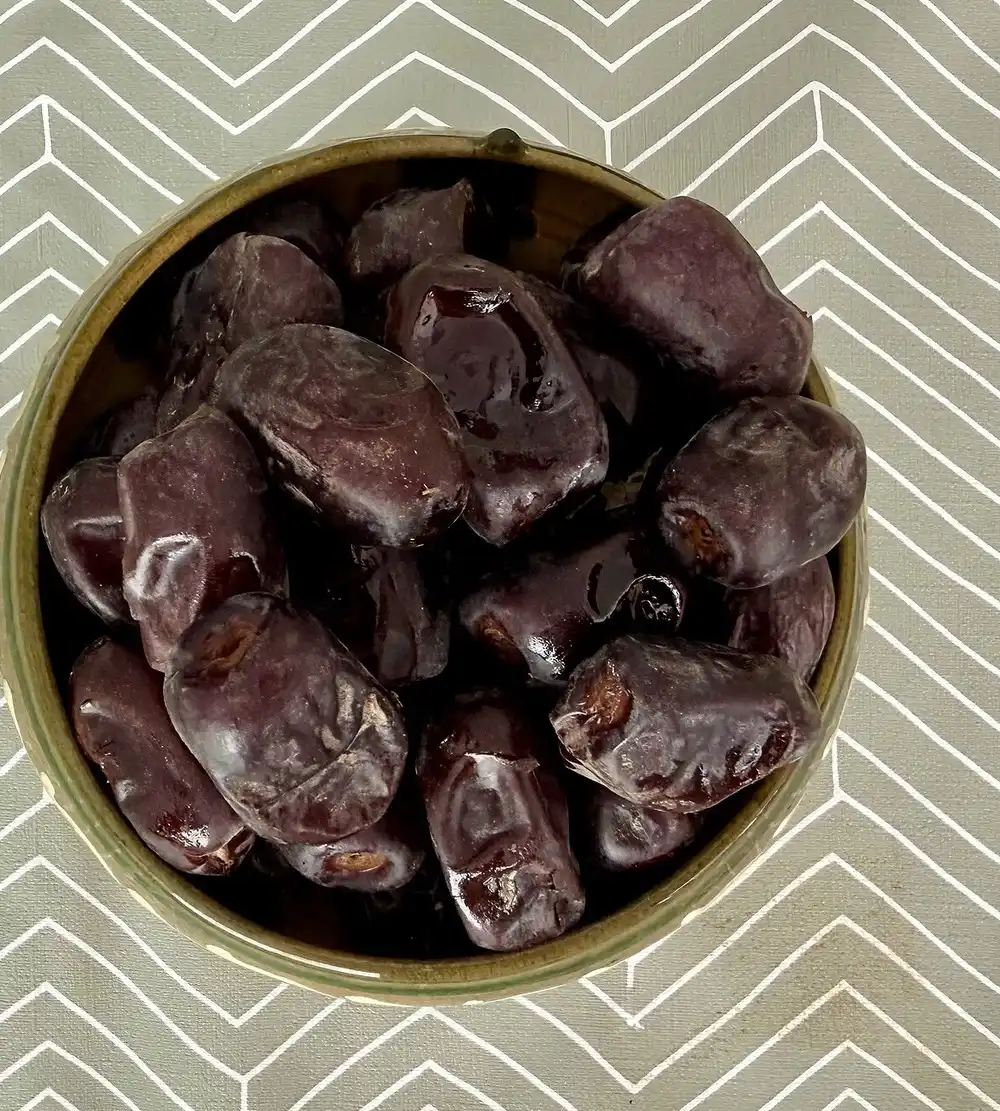
Recommendation: run this simulation before committing capital
Before deciding on a budget tier, calculate break-even using the product mix you'll actually sell, not a generic average. A Rp3 million budget still makes sense for market testing, as long as you're ready to restock once around week 3 or 4. For faster break-even with more capital available, Rp15 million with a balanced Sukari-Ajwa mix is the most time-efficient choice. Products like Sukari Al-Qassim Dates work well as a volume driver, while Ajwa Madinah Dates contribute the bulk of the margin. Keep in mind these figures assume Rp800,000 in operating costs and a 20% markup; if your city needs higher shipping subsidies or a thinner markup due to competition, rerun the numbers with your local figures before settling on a budget tier.

If you need a simulation with your specific budget numbers, message our team on WhatsApp first so the calculation matches your target city and preferred date varieties.