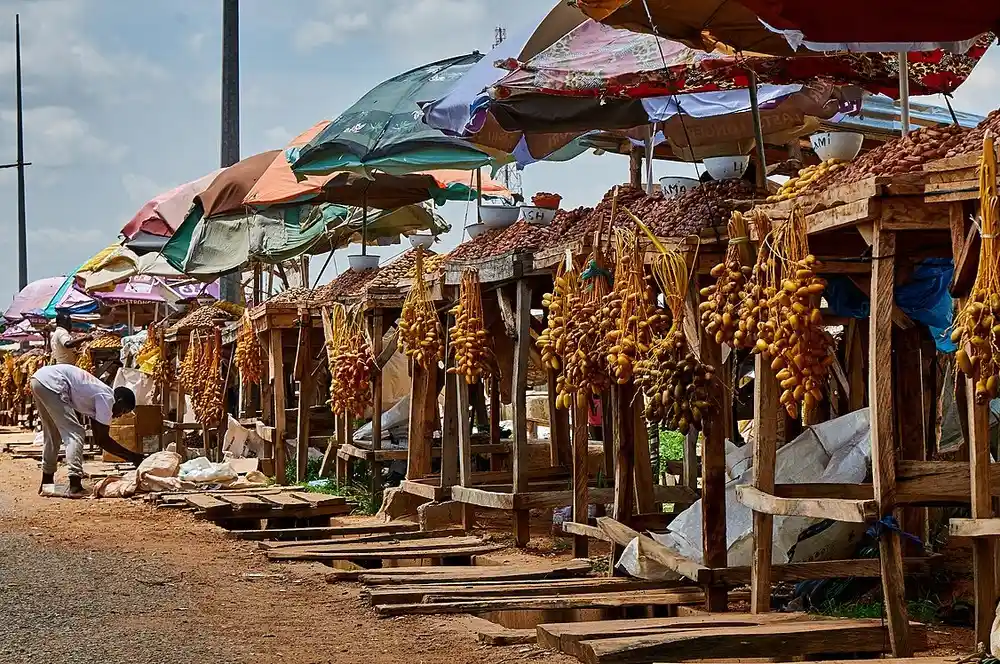
An Indonesia date importer brings dates straight from producing countries like Saudi Arabia, Palestine, Iran, and Egypt, with no local distributor sitting in between. The difference from a regular date agent: a regular agent buys from a distributor, the distributor buys from an importer, and the importer buys from the exporter at origin. That three-layer markup is why a regular agent's price can run 20-30% higher than an agent linked straight to the importer's line.
Why a direct importer line matters for date agents
Run the math yourself. Every time dates change hands, a margin gets added, usually 8-15% per layer. A chain running exporter to importer to distributor to sub-agent to agent means four markup layers before the dates reach you. An agent linked directly to the importer cuts out two of those middle layers. The gap is real: Ajwa dates grade AAA VIP run around Rp384,000/kg on the direct line, while the layered route can hit Rp470,000 to Rp500,000/kg for the same grade. Stack three 10% markups and the result isn't a flat 30%, it compounds to roughly 33% over the base price, which is why the gap at the end of the chain usually feels bigger than beginners expect.
Stock is the part new agents forget to check. Local distributors usually hold only 2-3 date varieties in limited quantity, because they themselves are waiting on shipments from the importer above them. Once the importer runs short during Ramadan, the distributor runs dry too, and the agent at the end of the chain feels it first. Read more on this pattern in Ramadan date agent stock planning for 2026.
Comparing distribution lines: direct importer vs distributor vs sub-agent
Before signing up for any date agent program, ask which line you'd actually be standing on. This table sums up the three common routes in Indonesia.
| Distribution line | Markup layers | Agent margin potential | Stock-out risk |
|---|---|---|---|
| Direct importer to agent | 1 layer | 25-35% | Low, stock is secured straight from the importer |
| Importer to distributor to agent | 2 layers | 15-20% | Medium, depends on the distributor's own stock |
| Importer to distributor to sub-agent to agent | 3 layers | Under 10% | High, prone to running out when demand spikes |
This difference in lines also decides which kind of partnership fits you. If you're still unclear on the general difference between agent, distributor, reseller, and dropship, read agent vs distributor vs reseller vs dropship for dates first before deciding on an importer line.
Date prices on the importer line: grade table and 2026 ranges
For scale, here is the per-kg price of Ajwa dates on the direct importer line, from the smallest grade to jumbo, as it stands for 2026.
| Grade | 1 kg price | 5 kg price |
|---|---|---|
| A (Mini) | Rp320,000 | Rp1,360,000 |
| AA (Small) | Rp352,000 | Rp1,496,000 |
| AAA VIP (Large) | Rp384,000 | Rp1,632,000 |
| VVIP Jumbo | Rp416,000 | Rp1,768,000 |
Stack that against other mid-grade varieties and the gap between types gets clear fast. See the comparison below.
Piarom from Hajiabad, Iran, runs much cheaper per kg than Ajwa because supply is larger and logistics costs out of Iran sit lower. That's part of why new agents are usually told to start with a friendlier-priced variety first, then add Ajwa once turnover is running. A full simulation on capital and margin sits in 2026 wholesale import date prices for agents and resellers.
Margin simulation: Sukari and Safawi on the direct line vs the layered line
To make this less abstract, here's the math for two varieties new agents usually start with: Sukari and Safawi. On the direct importer line, Premium grade pricing sits far friendlier than Ajwa, but the percentage gap against the layered route holds steady.
| Variety & grade | 1 kg direct line | Estimated 1 kg, 3-layer line | Gap per kg |
|---|---|---|---|
| Sukari Premium | Rp95,000 | ±Rp126,000 | ±Rp31,000 |
| Sukari Super | Rp105,000 | ±Rp140,000 | ±Rp35,000 |
| Safawi Premium A No.1 | Rp90,000 | ±Rp120,000 | ±Rp30,000 |
| Safawi Premium AA | Rp108,000 | ±Rp144,000 | ±Rp38,000 |
Multiply that gap by monthly volume. An agent moving 50 kg of Sukari Super a month saves around Rp1.7 million just from cutting two distribution layers, before counting the resale margin to end buyers. At Ramadan or Eid parcel volumes, that figure can run two to three times higher since order size usually jumps well above a normal month.
Signs of a credible Indonesia date importer
Not everyone claiming a "direct line" is actually an importer. Some are just large distributors dressed up to look like one, while their own stock still depends on a shipment from someone else. Here's what to check before putting money down.
| Indicator | Credible importer | Warning sign |
|---|---|---|
| Trade relationship history | Decades of direct ties with exporters at origin | Can't name a specific exporter or origin country |
| Variety count | 15-20 date types available at once from multiple countries | Only 2-3 types, rotating in and out of stock |
| Price consistency | Clear per-grade price list that rarely shifts without notice | Sudden price jumps with no explanation, especially near Ramadan |
| Stock documentation | Can show warehouse stock proof per variety | Always answers "we'll check" when asked about stock |
The variety count matters because the more types available from one source, the less likely you run out right when a type is selling well. For a rundown of the varieties on the market, see the complete guide to the best date varieties.
How to join as an agent through the direct importer line
The steps aren't far off from signing up as a regular agent, but there are a few extra checks worth doing before signing or wiring a deposit.
- Ask for the per-grade, per-weight price list and compare it against distributor prices in your city.
- Ask about the origin country and proof of import history, don't just take "direct from abroad" at face value.
- Check how many varieties can be ordered at once, ideally more than 10 types under one agent account.
- Confirm there's a clear reorder system for busy seasons like Ramadan and Eid.
Don't skip checking shipping documents either. A genuine importer usually has customs records and container numbers they can produce on request, not just warehouse photos lifted for a marketplace listing. The full walkthrough on sign-up steps, documents, and starting capital is in how to become a date agent in Jakarta and Jabodetabek.
Mistakes that cost agents money from picking the wrong line
The most common mistake: getting pulled in by a sub-agent's cheap price without checking who they buy from. Once the importer above them raises prices or runs low, that sub-agent collapses too, and the agent underneath feels it first, usually with no warning. A common version of this: an agent has already taken a 200-box Eid parcel order with a deposit collected from the buyer, then a week before delivery the sub-agent they source from says stock just ran out. The agent is left hunting for a pricier replacement or cancelling the order and eating the complaint. The second problem is leaning on a single date variety. If that one source runs dry, the whole revenue stream stops. A fuller list of beginner reseller mistakes is in common beginner date reseller mistakes.
Before you put money down
Before picking an agent program, ask for proof of two things only: the per-grade price list and the variety count actually in stock this week. A direct importer can usually answer both within minutes because the data sits in their own warehouse, not waiting on a third party's confirmation. Also ask for a distribution permit or product registration number if you plan to sell into modern retail, since that requirement tends to surface only after the money is already down. To check safe supplier criteria first, read tips for choosing a wholesale date supplier in Jakarta. Once you're confident in the line, varieties like Ajwa Madinah dates and Medjool Palestine dates tend to be the opening products buyers ask for most. A quick WhatsApp check on real-time stock before transferring capital is worth the five minutes.