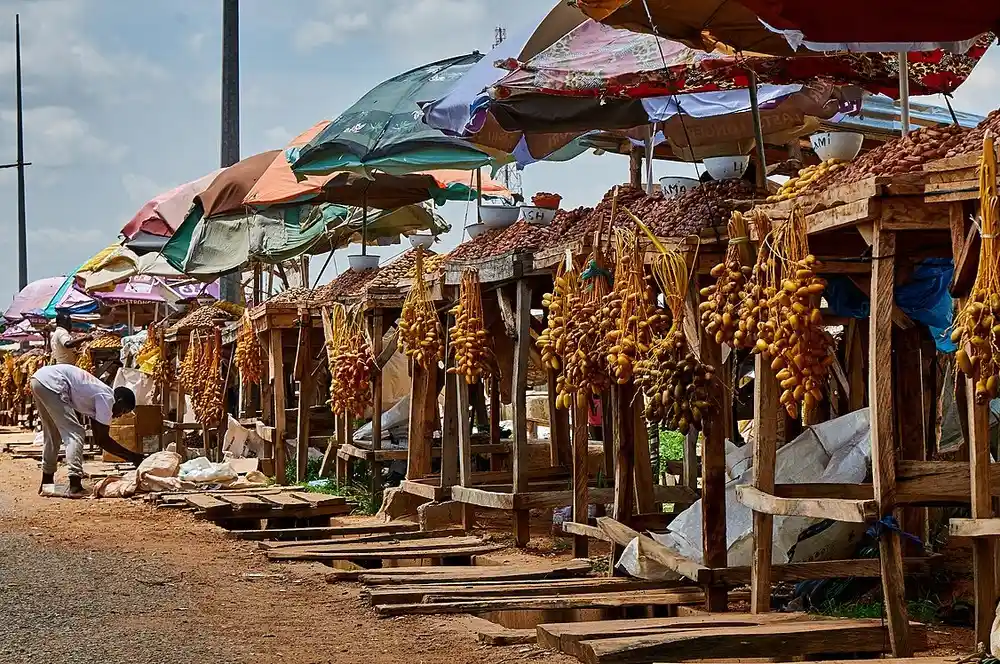
Date stock for Ramadan usually runs dry two weeks before Lebaran, right when demand peaks. If you want to run a Ramadan date agent business in 2026, the time to start stocking isn't during the fasting month, it's back in December or January. Wait two months too long and you've already lost the start to agents who got ready earlier.
Why Ramadan date stock disappears so fast
The pattern repeats every year. Small distributors buy from bigger agents, bigger agents buy from importers, and importers themselves order containers from Saudi Arabia or Tunisia months in advance. If one link in that chain orders late, everyone below feels it. Prices stay normal through November and December. By February they climb 15-25%, because demand spikes suddenly while a new container still needs 4-6 weeks to arrive from the origin port.
Resellers who start hunting for supply in March usually get hit twice: prices have already gone up, and the best grades, AA Ajwa, super Sukari, are long gone, snapped up by bigger agents who ordered early. What's left is usually mixed grade with inconsistent sizing, hard to sell at a premium price.
When to start stocking as a Ramadan date agent
Ramadan 2026 is expected to fall around mid-February. Working backward from that date, here's the timeline agents who've done this for years tend to follow:
| Period | What to do | Why |
|---|---|---|
| December | Confirm your stock quota with the supplier/importer | Containers from origin countries need 4-6 weeks |
| January | Take delivery of the first batch, 30-40% of projected Ramadan demand | Prices are still at normal, pre-season levels |
| Early February | Take the second batch and open pre-orders to customers | Demand is rising and competitors' stock is thinning |
| Mid-to-late February | Fast restock only to fill gaps, sell mostly from existing stock | Shipping lead times can no longer keep up with demand |
Agents who wait until March to move usually end up with whatever grade-B stock is left, if any is left at all. Some end up switching to varieties they never planned to sell, simply because the popular ones sold out first.
How much capital do you need for Ramadan stock
Ramadan stock capital is different from a normal month because volume is higher and you need it ready before orders come in, not after. You can check the full breakdown in the starting capital guide for date agents, but as a rule of thumb, multiply your normal monthly stock by 2-3x, since Ramadan alone typically accounts for 40-50% of a small date seller's annual revenue. If you normally stock 100 kg a month, plan warehouse space and cash for 250-300 kg going into Ramadan.
Agents working directly with an importer don't need to lock up as much cash upfront, since they can take stock in stages following the timeline above instead of buying everything in one lump sum in December. That's the difference between working through an importer's agent network and buying outright from a distributor, who usually requires a large minimum order per transaction to offer a competitive price.
Why local distributors run dry while direct importers don't
This is the part new resellers rarely get told. Local distributors buy from big agents who buy from importers, so there are two layers of queuing before stock reaches them. If the importer runs short on container quota, the distributors at the bottom of that chain feel it first, since quota gets allocated to the biggest buyers first.
An importer network built over 40-plus years has direct relationships with farms and exporters across Saudi Arabia, Egypt, Tunisia, and Iran, not just one supply line. If one origin country has a bad harvest, another route keeps moving. This is where the advantage of becoming a date agent through a direct importer shows up most, exactly during Ramadan, when other distributors are scrambling for replacement stock at already-inflated prices.
If you want the concrete steps to register as an agent before the Ramadan rush, start with the guide to becoming a date agent in Jakarta and Jabodetabek.
Which date varieties sell fastest during Ramadan
Not every variety sells at the same pace. Based on agents who've run several Ramadan seasons, three types move fastest.
- Ajwa: sought after for its religious significance, sells well despite a higher price per kg, especially heading into the odd nights of the last ten days. See grades and wholesale pricing for Kurma Ajwa Madinah.
- Sukari: a daily-consumption favorite for its caramel taste and soft texture, priced more affordably than Ajwa. Check Kurma Sukari Al-Qassim Saudi.
- Medjool: popular for gift parcels and hampers thanks to its large size and glossy look, and sells well in small packs with thicker margins.
Stock these three ahead of anything else, because if you run out mid-Ramadan, customers usually switch sellers rather than wait for a restock.
Common mistakes that leave agents out of stock midway
The most common mistake is calculating stock needs from a normal month's revenue instead of Ramadan's much higher buying pattern in the first and last ten days. The second mistake is assuming you can always restock on short notice without first checking the supplier's quota and shipping schedule. The third is putting all your capital into one variety, so when demand shifts to another type, the cash is already spent.
How to sell fast without idle capital
Open pre-orders from early February with a 30-50% down payment, this helps you gauge actual demand instead of guessing how much to stock. Bundling the three varieties above into one parcel package usually raises transaction value per customer compared to selling loose by the kilogram.
On pricing, don't set margins on a hunch. Compare against the 2026 wholesale import date price list to keep your margin realistic against the seasonal price bump Ramadan usually brings.
If you run out in the third week of Ramadan, don't promise a restock you're not sure will arrive on time. Being upfront about limited stock beats losing customer trust midway through.