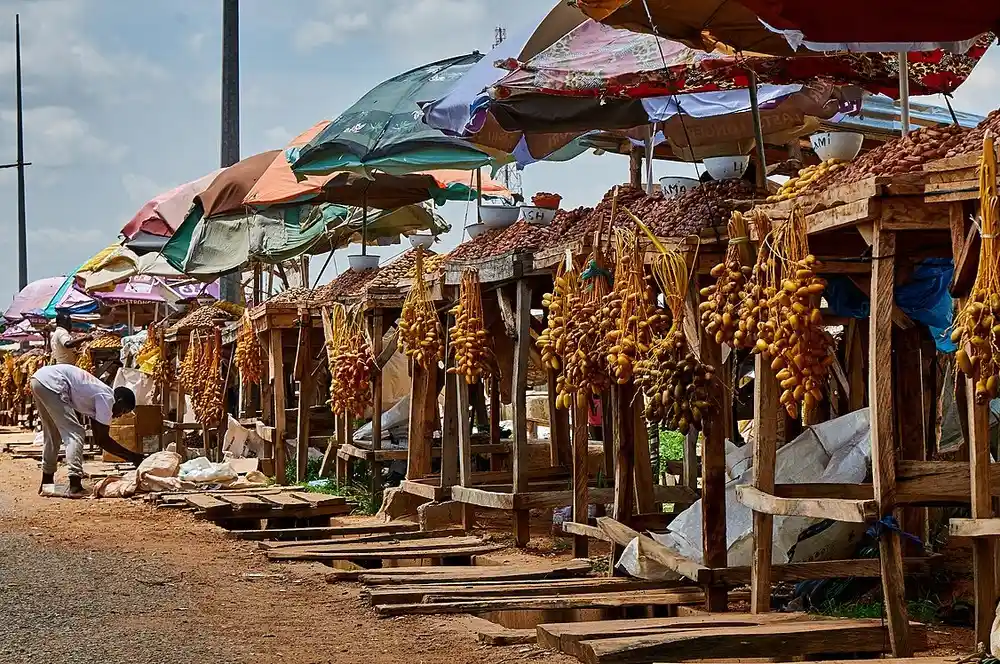
Becoming a dates agent in East Jakarta realistically starts with Rp3,000,000 to Rp8,000,000 in capital, not the tens of millions many newcomers assume they need. What decides whether an agent survives the first three months is not the shop location, it is the supply route.
East Jakarta has 10 districts with noticeably different demand patterns. The population tops 3 million spread across those districts, and the market character varies sharply between them: an industrial district like Pulogadung behaves nothing like a residential one such as Duren Sawit. An agent who treats both the same way usually miscounts stock within the first month. An agent who understands this map can decide which variety to stock first instead of buying a mixed batch and guessing at the market afterward.
Opportunity map: which parts of East Jakarta matter most
Cakung and Duren Sawit have the steadiest bulk demand because they are dense residential areas close to several large traditional markets. Kramat Jati moves product through the wholesale channel since Pasar Induk Kramat Jati acts as a distribution point feeding smaller traders nearby. Jatinegara and Pulo Gadung tend to be seasonal, spiking sharply during Ramadan and around Maulid.
Pulogadung itself has a distinct profile because its industrial zone is packed with office staff and factory cooperatives. Employee cooperatives often order bulk dates for distribution during specific occasions, sometimes 20-30 kg in a single order, far larger than a typical household purchase.
Matraman and Pasar Rebo suit agents targeting home resellers through WhatsApp and marketplaces, since the demographic there leans toward young families who shop online. A new agent should focus on 1-2 districts first rather than spreading thin across ten at once.
Supply route: local distributor vs direct import line
This difference is the most underrated factor for new agents. A local distributor usually already bought from an importer and resells with a markup, sometimes two layers of markup if the chain is long. An agent entering through a direct import line cuts out one or two of those layers.
A direct import line contract usually sets a minimum order per delivery, but for a new agent in East Jakarta this can be negotiated down to 15-20 kg per variety, light enough for a market test. A delivery schedule every two weeks also helps an agent manage cash flow since there is no need to tie up capital in a large stock from day one.
| Supply route | Price range/kg | Variety range | Stock reliability |
|---|---|---|---|
| Local distributor (2nd-3rd layer) | Rp130,000-Rp400,000 | 5-8 common varieties | Often runs out during Ramadan |
| Direct import line | Rp90,000-Rp320,000 | 6 varieties with several grades each | Stock stays steady due to direct contracts at origin |
| Spot buying at wholesale market | Rp150,000-Rp350,000 | Depends on the trader's daily stock | Not guaranteed, price swings day to day |
The per-kilogram gap looks small, but if an agent sells just 50 kg a month, a Rp20,000/kg difference already equals Rp1,000,000 in extra margin. For a deeper comparison, see direct import line vs regular agent.
Seasonal pattern: when demand rises and falls
Demand for dates in East Jakarta is not steady year-round. From two months before Ramadan through 3 days before Lebaran, sales volume can rise 3-4 times compared to a normal month, especially for varieties used in gift boxes such as Medjool. Once Lebaran passes, demand drops sharply for 2-3 weeks before settling again.
Maulid Nabi brings a second, smaller bump, usually 30-50% above a normal month, since many religious study groups hold gatherings that serve dates. Outside those two windows, the steadiest daily demand comes from monthly neighborhood study groups and savings circles that routinely buy 2-5 kg per gathering, not one large order followed by silence.
A new agent should track this pattern from month one. Starting outside the Ramadan season doesn't mean demand stays low forever, since the seasonal spike can arrive fast, and an agent caught without stock misses the most profitable stretch of the year.
How much starting capital is realistic
Capital does not need to be large upfront. These three tiers are common among new agents across Jabodetabek, East Jakarta included.
| Tier | Capital range | Starting stock | Note |
|---|---|---|---|
| Starter | Rp3,000,000-Rp5,000,000 | 1-2 varieties, around 15-20 kg | Good for testing one district first |
| Mid | Rp5,000,000-Rp8,000,000 | 3-4 varieties, 30-40 kg | Can start serving small resellers |
| Large | Rp15,000,000-Rp20,000,000 | 5-6 varieties with full grades, 70-100 kg | Ready to supply several shops at once |
As a rough guide, Rp5,000,000 in the mid tier with an average margin of Rp25,000-Rp35,000/kg can pay back in 5-7 weeks if half the stock sells steadily, faster still if it happens to land during Ramadan. This is not a guarantee, since how fast stock moves depends heavily on how well an agent maps 1-2 target districts at the start.
For a more detailed cost simulation and profit potential, check starting capital to become a dates agent.
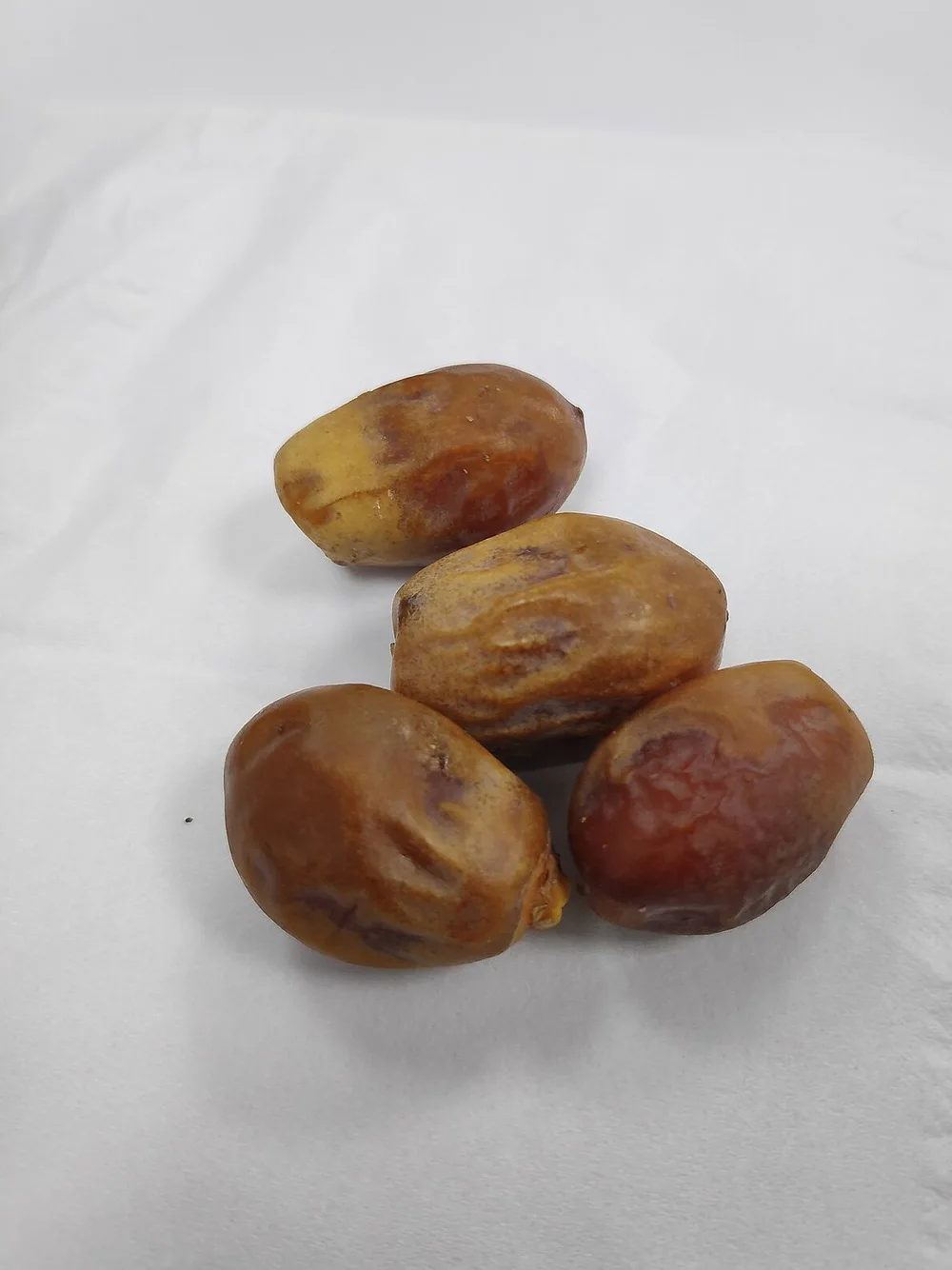
Price per kilogram varies a lot by variety, and this is where new agents often miscalculate their budget. Sukari sits around Rp95,000/kg, Safawi Rp90,000/kg, Piarom grade A Rp120,000/kg, the Madinah-origin grade A variety around Rp320,000/kg, while Jordan Medjool works out to roughly Rp255,000/kg when calculated from a 5 kg case.
The chart shows why a beginner agent should mix mid-price and high-price varieties rather than going all-in on one. If one variety is slow that week, the others still cover turnover.
Steps to register as a dates agent
- Survey 1-2 target districts for a week: check prevailing prices at nearby stalls and small shops.
- Pick a capital tier that matches your actual means, don't force into the large tier without steady customers yet.
- Apply through the direct import line via the official contact, ask for the per-grade price list and delivery schedule to East Jakarta.
- Run a 2-week test sale in one location, tracking which variety sells fastest before adding more stock.
Full administrative requirements and documents are covered in how to become a dates agent in Jakarta, and for comparing other Jabodetabek areas, see dates agent in Jabodetabek.
Local selling strategy for East Jakarta
Mosques and religious study groups around Cakung and Duren Sawit regularly need bulk dates, not only during Ramadan. Agents who routinely offer a special rate to mosque committees tend to get repeat monthly orders.
Beyond mosques and study groups, small grocery stalls around Pasar Cipinang and Pasar Enjo also routinely take small batches of 3-5 kg to resell in 100-250 gram portions. An agent who builds a dedicated WhatsApp group for regular buyers, mosque committee members, savings-circle members, and stall owners, tends to get repeat orders without heavy monthly promotion.
For home resellers, Kurma Sukari Al-Qassim is a safe pick because its caramel-like sweetness appeals broadly and the price still works for 250-gram retail packs. For a lighter flavor at a mid-range price, Kurma Mesir Golden Valley also moves well in small grocery shops.
Mistakes that cost new agents money
The most common mistake is buying 5-6 mixed varieties on day one without any local market research. Half the stock ends up sitting idle because the neighborhood only recognizes 2 familiar varieties.
Storage gets overlooked too. Keep dates in a humid spot without an airtight container, and the texture changes within 2-3 weeks, making it hard to sell at full price. Pricing every grade the same causes a different problem, since the gap between grade A and AAA can be Rp30,000-Rp60,000 per kilogram.
Skipping first-in-first-out stock rotation is another one. Dates that arrive first should sell first, otherwise older stock piles up behind newer stock, and the older batch loses quality before it ever gets sold.
The most sensible move for beginners
If you're just starting, take the starter tier with 2 varieties in one district first, then review after 2 weeks of selling. A direct import line leaves more margin room than buying from a second-layer distributor, and that margin is what decides whether an agent moves up a tier or stalls out by month three. Reach out to the agent registration team on WhatsApp to check the latest delivery schedule for East Jakarta.